




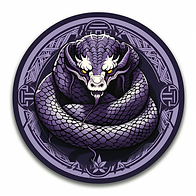
Updates to Base Rules Set

Updated: Jan 14
I have updated the rules set based on feedback from local beta testers.
Updates include a separation of each turn into phases allowing a player to do more such as draw a card, play a card, and move and enter combat. This change helps speed up game progression and opens up interesting combos. Players can now move and activate all Avatars currently in play which just feels more natural and it also allows for future updates on multi-Avatar attacks in combat.
I have updated combat result calculations so that equipped Items and Avatar abilities weigh more on combat resolution and the number of lost cards.
I have also made several clarifications of how placement, movement, and Realm Stones work.
Shén, Beta Testing Rules 01/05/2026
Introduction:
The objective is to deploy your clan avatars to reclaim fragments of the shattered material plane and merge them with your growing realm. You must plant your realm stone on a fragment, then channel your Shén (spirit) power into it while also gaining a physical foothold to defend it by sending clan avatars to fight and secure anchor points to attach this fragment to your Home Realm.
As the Celestial of your clan your influence at these fragments is remote and finite, and other clans, long separated by the shattering of the world stone, also vie for spiritual and physical dominance to expand their realms.
You must protect your realm stone as your connection to this unclaimed area and secure the anchor points that will allow you to add it to your ever-growing realm. You must maintain a flow of Shén power into these unclaimed fragments until your Shén dominates, and guide and support your clan’s avatars as they push back your opponent’s encroachments.
Rules:
Pre-Game
You and up to 5 other players will vie over a gridded playing field representing a planar fragment. A standard game will be between you and one opponent. We recommend using a standard playing field of 8x8 squares, similar to a standard chess or checkerboard.
Each player constructs a deck of an agreed upon number of cards. We suggest 40-60 cards for a typical game length. The number of cards you have represents the strength of your connection to this planar fragment and you are defeated if they are depleted.
Establish the game scenario by placing up to 6 Anchor Points on any space on the board. The default, and most balanced scenario places an anchor point at each of the 4 corners of the square game board.
Roll 2d6 and the player with the highest total goes first. In case of a tie, reroll.
Starting with the first player and continuing anticlockwise, each player sets their realm stone in any empty vertex on the board, then places 4 Shén counters, one on each vertex around your realm stone to represent the center point of your physical and spiritual presence. Realm Stones and Shén counters can be placed on the outer border of the playing field, but those vertexes only have 2 or 3 vertexes next to them. Realm Stones cannot be placed next to another Realm Stone or a vertex of a space with an Anchor Point. Realm Stones cannot be removed during the game. The type of Realm Stone you place sets your home Realm. Playing cards associated with other Realms will require more power.
Each player shuffles their deck, places it face down and draws 6 cards into their hand.
Game Play
Starting with the last player to place their realm stone and continuing clockwise, each player takes a turn by completing three phases:
1) Recovery and Set-Up Phase:
Refresh all clan avatars by rotating your Avatar cards back 90 degrees from their Exhausted position to their Ready position.
And then either:
Draw a card into your hand from your deck. When there are no cards remaining in your deck, reshuffle your discard pile and place it face down to create a new draw deck.
or
Place one Shén counter on any empty (contains no Shén counter or Realm Stone) vertex where that counter, and any of your counters that are now associated with it (are next to or can trace an unbroken chain of your Shén counters along the Spirit Path to it), has/have at least one empty vertex next to them. Then remove any opponent’s Shén counters that are now surrounded and captured unless they are associated with their own realm stone. A Realm Stone counts as a Shén counter but cannot be removed. Players lose one card (removes cards from their Hand, Deck, or Discard Pile from the game) for every Shén counter removed.
2) Celestial Influence Phase:
Play a card from your hand. Cards can be played on any space or vertex where you have as many or more Shén counters than that card’s power cost (shown at the top right of each card). This includes up to four counters around the space or up to five on and next to a vertex. A vertex with a Realm Stone counts as having a Shén counter. Cards that don’t manifest an Avatar or Item, or don’t target a specific space or vertex, can be played using your Shén around any one space (not a vertex). Cards not associated with your Home Realm, as noted by the clan icon on each card, require one more Shén to play (This means that you cannot play a card with a four-power cost if it is not associated with your Home Realm or you have a way to add additional Shén).
If the card you play is an Avatar, then Manifest (i.e. place on the board) its miniature/counter to an empty space where you have as many or more Shén counters (0-4) in that space as the Avatar card’s Power Cost. Avatars that have Spirit in their name are manifested onto a vertex of the spirit path (the lines bordering each space) not into a space like other Avatars. These Spirit Avatars are manifested onto a vertex where you have as many or more Shén counters (0-5) as their Power Cost (This includes the vertex and the up to 4 vertexes connected to it).
Manifested Avatar cards are placed face up next to the board in front of you so that card text and traits are visible to all players. Manifested Avatars enter play Exhausted (Rotate their card 90 degrees to show it cannot be Activated until Refreshed).
If a card states that the bearer gains something when it is played, then that Item card is equipped by placing it under a Manifested Avatar’s card with all trait bonuses clearly visible to all players. Item cards cannot be played onto an Avatar Walking the Spirit Path. An Avatar can have up to 3 equipped items.
Unless otherwise stated, all cards other than Avatars or Items, are resolved immediately and then placed face up in your discard pile. Cards that are Remains in Play should be placed next to the playing field as a reminder of their effects.
3) Claim, Move, and Attack Phase
For each Avatar you have in play you may:
Claim an Anchor Point if you have a Ready Avatar on an Anchor Point at the start of your turn. Turn that Avatar’s card 90 degrees to show it is now Exhausted. Place one of your Shén counters on that the Anchor Point to show you have claimed it. Previously claimed Anchor Points can be claimed by other players. For every additional Anchor Point you claim, beyond the first, your opponent loses (removes cards from their Hand, Deck, or Discard Pile from the game) a card (that means when you claim a third anchor point, your opponent loses 2 cards for example).
or
Attack a Realm Stone if you have a Ready Avatar next to it at the start of your turn. Turn that Avatar’s card 90 degrees to show it is now Exhausted. Each player may play one card from their hand and use one ability that directly affects the attack if the attacker’s space or target vertex is surrounded by as many or more of your Shén counters as its power cost. Avatar or Item cards can’t be played during combat.
The attacker automatically wins an attack on a Realm Stone (no dice are rolled) and the defender loses a number of cards (removes cards from their Hand, Deck, or Discard Pile from the game) equal to the attacking Avatar’s Attack power (The number that is furthest to the left on an Avatar’s Trait Bar shown at the bottom right of each card), adding any equipped Item, ability or other card bonuses, but not any from Shén counters. One Avatar or Item ability can be used before, during, or after the attack if there are as many or more Shén counters surrounding the space or vertex where the attack on a Realm Stone originates.
or
Move an Avatar a number of spaces (or vertexes if they are Walking the Spirit Path) up to their movement trait value. Movement trait value is located at the middle right of each card. An Avatar is not Exhausted by moving into or through open (not occupied by another Avatar) spaces or vertices.
Avatars in spaces can move horizontally, vertically or diagonally to adjacent spaces, while Avatars Walking the Spirit Path move only horizontally or vertically between vertexes. Avatars Walking the Spirit Path can only move onto vertexes where you have or will have your Shén counter by the end of your turn. If a Shén counter under an Avatar Walking the Spirit path is removed or converted, that Avatar is immediately removed from the board and its card returns to that player’s hand. Avatars cannot move onto a Realm Stone vertex or diagonally between spaces on either side of one.
Following a move, you can also
Use an ability of a Ready Avatar. Turn that Avatar’s card 90 degrees to show it is now Exhausted. Abilities can be used if that Avatar is in a space or vertex which is surrounded by as many or more Shén counters than its ability’s power cost as stated in the card’s text box. A Shén counter on the same vertex as an Avatar on the Spirit Path counts towards this total.
or
Make a Ranged Attack from one of your Ready Avatars by targeting any other Avatar 0-4 spaces away (Measure the distance from spaces diagonally and/or horizontally/vertically). Ranged attacks are not allowed to or from a vertex on the Spirit Path unless otherwise stated. Avatars, Realm Stones, or other objects do not block line of sight for ranged attacks unless stated. Turn your attacking Avatar’s card 90 degrees to show it is now Exhausted.
Each player, starting with the attacker, may play one card from their hand and use one ability that directly affects a ranged attack before ranged attack and defense rolls are made if the attacker’s origin or defender’s target space is surrounded by as many or more of your Shén counters as its power cost. Avatar or Item cards can’t be played during combat.
Roll one dice per Ranged Attack Power (The number that is furthest to the right on an Avatar’s Trait Bar) and one for any ability, equipped Item or played card bonuses. Compare that attack result to the target’s defense result roll of one dice per Defense Power (The number that is in the center of an Avatar’s Trait Bar) and one for any ability, equipped Item or played card bonuses. If the attack result is higher than the defense result, the attacker wins and the defender loses a number of cards (removes cards from their Hand, Deck, or Discard Pile from the game) equal to the attacking Avatar’s Ranged Attack Power stated on their card, adding any ability, equipped Item, or played card bonuses. The defender wins if there is a tie. The defending player may chose to remove their defending Avatar instead of losing cards due to a ranged attack. If the attack result is twice the defense result, then the defending Avatar is automatically removed from the game and cards are still lost as normal. If the ranged attack result is lower than the defense result, the defender wins but no cards are lost.
After a ranged attack is resolved, one of the winning Avatar’s abilities may now be used if that Avatar is in a space which is surrounded by as many or more Shén counters than that ability’s power cost.
or
Make a Melee Attack if your Avatar moves into a space or vertex occupied by an opponent’s Avatar. Turn your attacking Avatar’s card 90 degrees to show it is now Exhausted.
Each player, starting with the attacker, may play one card from their hand and use one ability that directly affects a melee attack before melee attack and defense rolls are made if there are as many or more of your Shén counters as its power cost around or on the space or vertex the attacker moved from, for the attacker, or around or on the defended space or vertex, for the defender. Avatar or Item cards can’t be played during combat.
The attacker rolls one dice for each of your Avatar’s Melee Attack Power (the number furthest to the left on an Avatar’s Trait Bar) or, for the defender, Defense Power (the center number on an Avatar’s Trait Bar), one for each of your Shén counters, for the attacker, around or on the space or vertex the attacker moved from or, for the defender, around or on the defended space or vertex, and one for any Item, ability, or played card bonuses. Compare the total attack result to your opponent’s defense result. The winner of the combat is the player with the higher Melee Combat Result. The defender wins if there is a tie. A player with an Avatar defeated in melee combat loses cards (removes cards from their Hand, Deck, or Discard Pile from the game) equal to the opponent’s Avatar’s Melee Attack or Defense Power, adding any equipped Item, ability or played card bonuses, but not any from Shén counters. The player of the defeated Avatar may chose to remove them from the game instead of losing cards from a melee attack. If the winner's combat result is twice that of the defeated, then the defeated Avatar is automatically removed from the game and cards are still lost as normal.
The winner places their Avatar in the attacked space/vertex (a winning defender stays put), while a defeated attacking Avatar must retreat back one space/vertex along the direction they moved from. A defeated defending Avatar is moved one space/vertex away from the direction of the attack. If there is no empty space/vertex to retreat to, place that Avatar next to that player’s Realm Stone. If no space/vertex is available around a Realm Stone, their Avatar is removed from the game. After combat is resolved, one of the winning Avatar’s abilities may now be used if that Avatar is now in a space or vertex which is surrounded by as many or more Shén counters than that ability’s power cost. A Shén counter on the same vertex as an Avatar walking the Spirit Path counts towards this total.
Winning the Game:
A player wins when they claim all Anchor Points set for the scenario, or if they are the only player left with cards in their deck, discard pile, or hand. Previously played Avatar, Item, or Remains in Play cards do not count if they are still in play.
If there are at least two players remaining, play proceeds to the next player.
If playing in teams, players on each team should alternate placing their realm stones and taking turns. A team loses when the opposing team claims all Anchor Points set for the scenario or none of their players have any cards left in their deck, discard pile, or hand.


Comments